What Are the Best Box Erector Machines from China?

Time:2026-11-01 Author:Madeline
0%

Choosing the right Box Erector Machines from China requires more than comparing prices or polished product photos. Factory experience, verified output, carton compatibility, and after-sales support matter equally.

Industry data shows why this equipment deserves careful evaluation. Fortune Business Insights valued the global packaging machinery market at approximately USD 52.83 billion in 2023. Its report also forecasts continued growth through 2030, driven by automation, e-commerce, and stricter packaging consistency. The International Federation of Robotics reported that China installed 276,288 industrial robots in 2023. That represented more than half of global installations and reflects China’s strong automation manufacturing base. These figures support China’s potential, but they do not prove that every supplier delivers reliable machinery.

Performance must be tested in practical conditions. A machine should erect cartons evenly, maintain stable speed, and avoid crushed corners during long production runs. Buyers should examine servo control, glue or tape systems, changeover time, safety guarding, and spare-parts availability. Reports from PMMI also emphasize labor shortages, operational efficiency, and flexible packaging lines as major investment drivers. Those concerns are visible on the factory floor, where a five-minute adjustment can become an hour of lost production.

No ranking is perfect. Some suppliers publish impressive speeds that require ideal cartons and skilled operators. Therefore, this guide compares leading Chinese manufacturers through technical evidence, factory verification, customer feedback, and documented quality systems. ISO 9001 certification, CE-related documentation, and clear risk assessments should support the review, not replace it. The best choice depends on your carton sizes, line speed, budget, and maintenance capability.
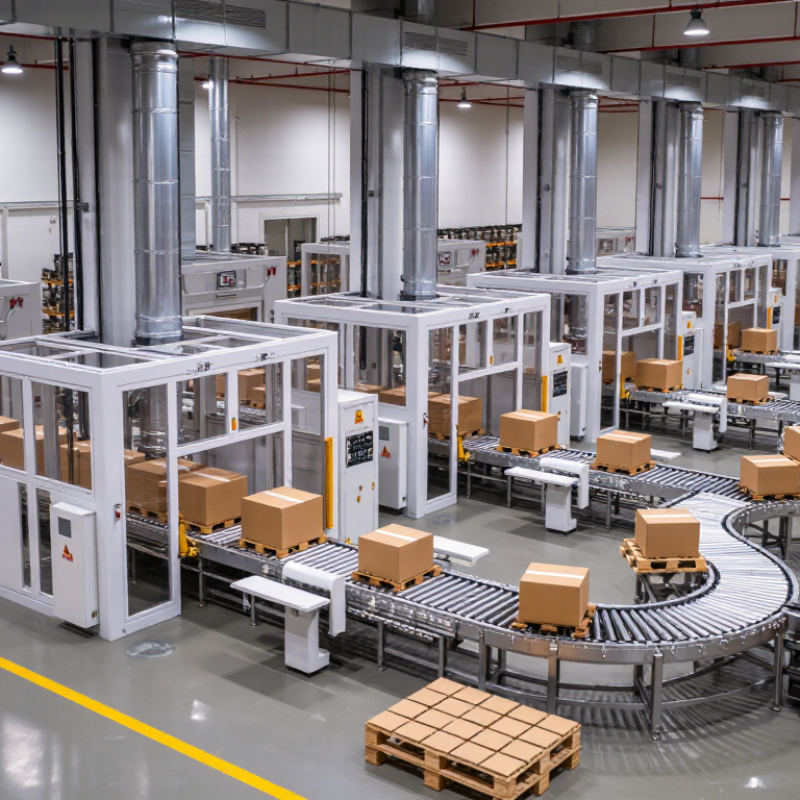
What Are the Best Box Erector Machines from China?

What Is a Box Erector Machine and How Does It Work?

A box erector turns flat corrugated blanks into open cartons ready for packing. A magazine holds the blanks, while suction cups or mechanical grippers separate one carton at a time. The machine pulls it forward, squares its panels, and folds the bottom flaps. Tape or hot-melt adhesive then seals the base. That is the basic cycle. Sensors check carton position and detect misfeeds, while a programmable controller coordinates each movement.

Operators should watch the details. Warped blanks, dusty surfaces, or inconsistent board thickness can cause double picks and crooked cartons. Changeover settings matter, too: carton dimensions, fold positions, and sealing pressure must match the packaging specification. A machine that forms cartons quickly may still create jams if blank quality varies. Test with actual cartons, not only clean samples.

PMMI’s 2023 State of the Industry report placed U.S. packaging machinery shipments at about $10.9 billion in 2022. This figure covers the wider machinery sector, not box erectors alone, but it shows the scale of investment in packaging equipment. For buyers comparing Chinese-made systems, ask for measured cartons per minute, changeover time, and sustained run data. Watch a full production run. A short demonstration can hide small problems.

Which Types of Box Erectors Are Made in China?

Chinese-made box erectors generally fall into semi-automatic and fully automatic models. Semi-automatic units guide an operator through opening and squaring flat corrugated blanks, then folding the bottom flaps. They suit smaller production runs or frequent carton-size changes. The operator still handles part of the cycle. That can be useful, though it adds labor.

Fully automatic erectors draw blanks from a magazine, open each carton with suction cups, and form its shape using guides and folding arms. Some models also fold and seal the bottom, while others pass cartons to a separate machine. Compact versions fit tight spaces; higher-output systems can connect with conveyors and packing lines. Not every line needs maximum speed. A faster machine may create more stoppages if blanks arrive unevenly.

Many suppliers also offer adjustable erectors for several carton sizes, plus custom configurations for specific blank dimensions or line layouts. Changeover may involve hand wheels, position scales, or tool adjustments, so ask how long a real size change takes. Check the machine with your own cartons: warped blanks, weak corrugated board, and inconsistent scores can affect pickup and squaring. A short trial can reveal issues that a specification sheet will not.

What Features Define the Best Chinese Box Erector Machines?

The best Chinese box erector machines handle the cartons a factory actually uses, not just ideal samples. Look for adjustable guides, a stable blank magazine, and vacuum cups that pick one flat carton reliably. Small details matter. Sensors should detect empty magazines, misfeeds, and jams before they disrupt the line.

A capable machine forms square cases and seals their bottoms consistently with tape or hot-melt adhesive. Ask whether the settings can be saved for different carton sizes, and check how operators make adjustments. Clear scales and accessible handwheels can make changeovers easier. A touchscreen is useful, but only if its alarms are understandable and the controls are practical. No catalog can prove that.

Evaluate performance using your own cartons, including the board grade and size range you expect to run. Watch for skewed cases, crushed edges, and adhesive placed off the seam. Review guarding, emergency stops, electrical drawings, spare-parts availability, and operating instructions. These are reliability features, not extras. A supplier should document a machine test and explain what output conditions were used. Real production can be messier than a showroom trial; that deserves honest discussion before purchase.

What Are the Best Box Erector Machines from China?

What Features Define the Best Chinese Box Erector Machines?

The chart converts selected throughput rates into the corresponding average cycle time: seconds per box equals 60 divided by boxes per minute. These are illustrative planning scenarios, not specifications or performance claims for any particular machine. When comparing box erectors, check the carton-size range, changeover time, forming consistency, sealing compatibility, safety features, and verified output under your actual operating conditions.

How to Compare Chinese Box Erector Suppliers and Models?

Comparing Chinese box erector suppliers starts with your actual cartons, not a headline speed. Share carton dimensions, board thickness, and the number of sizes you run. Ask each supplier to confirm the machine’s adjustment range and changeover method in writing. A useful quote should list the rated output, power requirements, included tooling, and installation scope. These details make quotations easier to compare.

Request a video test using cartons similar to yours. Watch how blanks feed, corners fold, and adhesive or tape is applied. Ask for sustained run data, not only a brief demonstration. Small details matter. Check whether the supplier provides spare-parts lists, remote troubleshooting, and clear response times. If possible, inspect a machine or arrange a live call during production. A polished video helps, but it cannot prove consistent performance over a full shift.

Compare models by fit and support, not price alone. Confirm that operators can reach adjustment points safely and clear common jams without awkward steps. Ask what routine maintenance involves and which parts wear fastest. Not always obvious. A supplier’s answers should be specific and supported by manuals, test records, or a sample acceptance plan. I would leave room for uncertainty: carton variation and site conditions can affect results, so agree on test criteria before ordering.

How to Choose the Right Box Erector for Your Packaging Line?

What Are the Best Box Erector Machines from China?

How to Choose the Right Box Erector for Your Packaging Line?

Choose a box erector around the cartons you actually run, not the fastest figure on a brochure. List your carton dimensions, board grades, and daily size changes. Check that the machine handles your smallest and largest blanks without skewed folds or crushed corners. A practical factory test should use your own cartons. Watch the feeder, squareness, and seal quality over a sustained run. Short bursts can hide jams.

Match rated speed to the line before and after the erector. The International Federation of Robotics reported 541,302 industrial robot installations worldwide in 2023, with about 70% in Asia, in its World Robotics 2024 report. That signals broad automation growth, but it does not prove a particular machine will improve your line. Ask suppliers for verified output under defined conditions, including operator intervention and stoppages. A number without context is not enough.

Inspect changeover time, footprint, and access for clearing misfeeds. Compare glue and tape options against carton weight and storage conditions. Ask about spare-part availability, manuals, remote support, and training. During acceptance testing, measure several changeovers and inspect a sample of erected cases. Small details matter: a blank that catches at the magazine can slow the whole line. I would also leave room for imperfect cartons; real production is rarely tidy.

What Are the Best Box Erector Machines from China? - How to Choose the Right Box Erector for Your Packaging Line?
Machine Type Typical Output Range Best Suited For Carton and Changeover Considerations Line Integration What to Verify Before Purchase
Manual or assisted box erector Operator-dependent; generally appropriate for low-volume production. Small operations, short production runs, and sites where automation is not yet justified. Usually accommodates a limited range of carton sizes. Operators may need to adjust guides and folding positions between sizes. Can feed a packing station or a basic conveyor with minimal controls integration. Ask for a live demonstration using your cartons. Check the required operator steps, adjustment time, and carton consistency.
Semi-automatic box erector Often around 5–10 cartons per minute, depending on the machine, carton, and operator. Low-to-medium output lines that need more consistent forming than manual erection provides. Typically requires an operator to load blanks or initiate cycles. Confirm the supported carton styles and the method for changing size settings. Can be paired with a downstream packing area; confirm discharge height and carton handoff requirements. Check whether the quoted rate includes loading and handling time, and test performance with your actual board grade and blank quality.
Automatic box erector Commonly about 10–30 cartons per minute; actual output varies by model and application. Medium-volume packaging lines with repeatable carton formats and a need for reduced manual handling. May use manual adjustments or stored settings. Verify minimum and maximum blank dimensions and whether size changes require tools. Can be connected to conveyors, case packers, and case sealers. Confirm controls, timing, and interface requirements. Request a production-rate test with representative blanks. Review guarding, jam access, changeover instructions, and spare-parts availability.
High-speed automatic box erector Some systems are designed for 30 or more cartons per minute; rates depend strongly on carton and line conditions. High-throughput lines running stable products and established carton specifications. Usually benefits from consistent, accurately cut and scored blanks. A wider size range can affect speed and changeover complexity. Requires careful coordination with upstream blank feeding and downstream filling and sealing equipment. Validate sustained output rather than peak speed. Confirm uptime assumptions, fault recovery, line buffering, and the supplier’s service response plan.
Random-size or adjustable box erector Application-dependent; output may be lower than a dedicated machine when cartons vary frequently. Lines that process multiple carton sizes or need adjustments between product orders. Confirm how dimensions are detected or entered, the supported size range, and whether carton styles can vary as well as dimensions. May need product or order data from line controls. Agree on communication signals and format-change procedures. Test the smallest and largest cartons, plus representative intermediate sizes. Check measurement accuracy and changeover behavior.
Carton sealing method Not a separate speed rating; the sealing method must match the line rate and carton design. All lines, depending on the required seal, shipping conditions, and packaging specification. Pressure-sensitive tape and hot-melt adhesive have different consumable, maintenance, and carton-compatibility requirements. Confirm whether sealing is integrated into the erector or handled by a separate case sealer. Test seal performance on your board and carton style. Specify tape width or adhesive requirements and access for replenishment.
Buying and line-fit checklist Set the required sustained rate from actual production needs, not the machine’s maximum headline figure. Any buyer comparing equipment for a new or existing packaging line. Provide carton drawings, blank dimensions, board specifications, and the expected mix of sizes. Check footprint, electrical supply, compressed-air requirements if applicable, conveyor elevations, and control interfaces. Compare acceptance-test criteria, installation and training scope, warranty terms, documentation, wear parts, and local technical support.

FAQS

What types of box erectors are commonly available?

Semi-automatic models need an operator to open blanks and fold bottom flaps. Fully automatic models use suction cups and folding arms. Some seal the bottom; others feed cartons to a separate machine.

When is a semi-automatic box erector a good choice?

It can suit smaller production runs or frequent carton-size changes. An operator still handles part of the cycle. That adds labor, but may offer useful flexibility.

What should I check before choosing an automatic model?

Compare the machine’s carton range with your smallest and largest blanks. Look for skewed folds, crushed corners, and missed pickups during a trial using your own cartons.

How can I tell whether the rated speed is realistic?

Ask for output figures under stated conditions, including stoppages and operator involvement. Run the erector with the machines before and after it. A short burst proves little.

Why test with my own cartons?

Warped blanks, weak board, or uneven scores can disrupt pickup and squaring. Watch the magazine feeder closely. Small flaws matter.

What affects carton-size changeover time?

Some machines use hand wheels, position scales, or tool adjustments. Measure several real changeovers instead of relying on a claim. I might underestimate this task.

How should the erector fit into my packaging line?

Check its footprint, access for clearing misfeeds, and connection to conveyors or packing equipment. Leave space around the machine. Lines get messy.

What support details should I confirm before purchase?

Ask about spare parts, manuals, remote support, and operator training. Inspect erected cases during acceptance testing, including their folds and seals. Keep a few imperfect cartons in the test.

Conclusion

Box Erector Machines automatically form flat-packed cartons into open boxes by feeding blanks, folding panels, and securing the bottom so cartons are ready for filling. Chinese manufacturers offer a range of designs, from compact semi-automatic units for lower-volume operations to fully automatic systems for faster production lines. Models may differ in carton-size flexibility, changeover method, operating speed, footprint, and compatibility with different sealing and conveying equipment.

When comparing suppliers and machines, assess build quality, reliable performance, ease of adjustment, safety features, maintenance needs, technical support, and the availability of replacement parts. The right choice depends on your carton dimensions, required output, production space, staffing, and budget. Confirm that the machine can handle your packaging materials and integrate smoothly with existing equipment, and request a practical demonstration or sample-box test before making a decision.


Madeline

Madeline

Madeline is a dedicated marketing professional with a wealth of expertise in our company's core offerings. With a keen understanding of the industry, she brings a unique perspective to her role, consistently delivering high-quality content that highlights the superior aspects of our products. As......