Global buyers are investing in faster, safer, and more consistent case packing operations. A Box Erector Machine can form flat cartons, square them, and prepare them for filling with less manual handling. Yet, buying one is not a simple capacity decision. Carton size, board quality, factory layout, labor skills, and after-sales support can change the result.
PMMI’s recent packaging machinery reports identify labor availability, automation, and operational efficiency as major priorities for packaging companies. The International Federation of Robotics also reported 541,302 industrial robots installed worldwide in 2023. This figure does not measure box erectors directly, but it shows a clear movement toward automated production. The machine should support that movement, not create a new bottleneck.
Small details matter. A carton magazine that holds too few blanks may force frequent refilling. Weak suction cups may leave a box half-open. An impressive speed claim may apply only to perfect cartons in controlled conditions. That is where buyers need healthy skepticism. Ask for performance tests using your actual board grade, dimensions, tape, glue, and line speed. Review uptime records, changeover time, spare-parts access, and operator training. A lower purchase price can become expensive when a servo motor waits overseas for six weeks. It happens.
This guide presents ten practical Box Erector Machine buying tips for international purchasers. It combines supplier evaluation, technical checks, installation planning, and lifecycle cost analysis. The aim is not to recommend one brand. It is to help buyers make a defensible decision based on verified evidence, measurable performance, and realistic factory conditions.
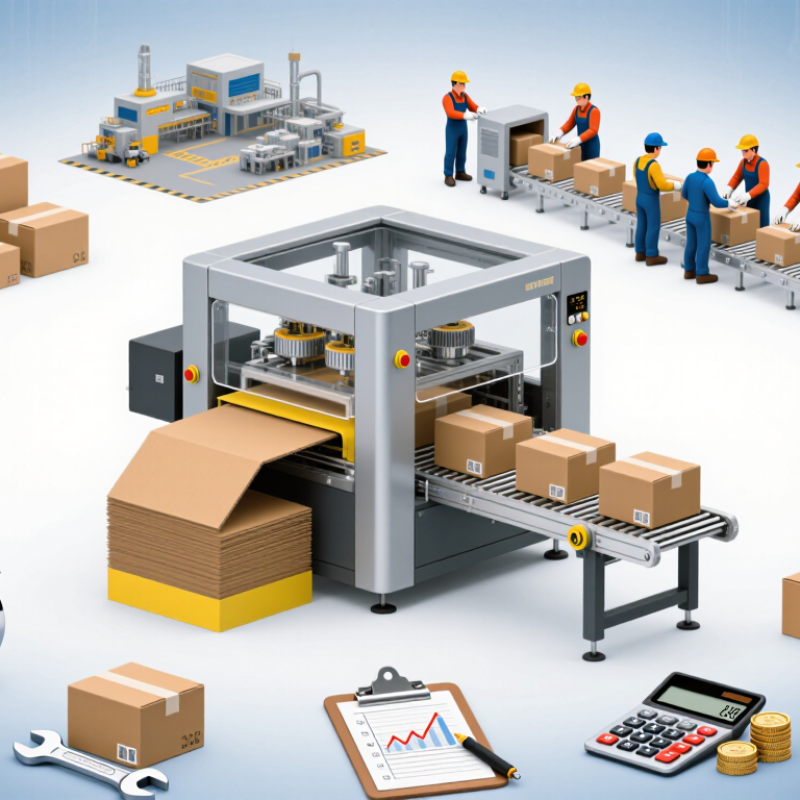
Before comparing a box erector, record the cartons your line actually uses. Measure blank length, width, depth, board grade, and allowable variation; even small differences can affect pickup and squaring. Include the smallest and largest formats, not only today’s most common carton. Start with the carton. Keep several flat blanks from routine production and ask suppliers to test them.
Set an output target from confirmed demand, then allow for short peaks rather than relying on a headline speed. Note cartons per minute, operating hours, shifts, and how often operators change sizes. Measure real work. A machine rated at 20 cartons per minute may not sustain that rate when blanks arrive unevenly or replenishment pauses. Record current stoppages and who clears jams; these details make equipment discussions more useful.
Map how erected boxes leave the machine: hand packing, a conveyor, or an upstream line. Check floor space, infeed direction, compressed-air availability, and access for cleaning and maintenance. Define acceptable changeover time and what one operator can safely manage. It is easy to underestimate this. Allow for possible future carton sizes, but validate those formats before paying for options. Document the assumptions behind each target; production plans can change faster than expected.
Choosing a box erector starts with the cartons you actually run, not the machine’s maximum speed. Intermittent-motion models form and seal one box at a time, making them a practical fit for varied sizes or moderate production rates. Continuous-motion machines can support higher output, but they usually work best with a narrower, predictable carton range. Semi-automatic equipment may suit smaller lines, though it still needs steady operator attention. There is no universal winner.
Treat the advertised speed as a reference, not a promise. Ask for the sustained rate using your board grade, carton dimensions, and closure method. A machine rated at 20 boxes per minute may slow down when blanks are stiff or operators replenish the magazine. Test a representative batch. Watch for skewed cartons, missed folds, and pauses during replenishment.
Check the smallest and largest box dimensions, including depth, width, and height. Confirm that your actual blanks feed reliably; a stated size range alone does not prove compatibility. Measure changeover time, too. Hand-adjusted guides can be adequate for occasional changes, but frequent format swaps may interrupt a busy shift. Small details matter. Keep a few production blanks for trials, and record each setting. It is easy to overlook setup effort when comparing machines on speed alone.
Compare machine types, throughput, and box-size compatibility before selecting equipment for different packaging lines and operating conditions.
The chart shows representative throughput ranges commonly used for planning: semi-automatic machines generally handle lower volumes, while continuous-motion and robotic systems can support higher production rates. Compatibility depends on carton length, width, height, board grade, adhesive or tape format, and the required changeover range. Always verify the final dimensions and speed with the machine specification before purchasing.
When buying a box erector machine, evaluate automation against your actual packaging volume. A fast machine may waste money if production changes hourly. Review carton detection, adhesive control, fault alarms, and automatic replenishment systems. These features reduce manual intervention and stabilize output during long shifts. Ask for recorded cycle data, not only a promised speed.
Changeover deserves close attention. Measure the time required to adjust carton width, length, and height. Tool-free handwheels, digital scales, and stored recipes can reduce setup errors. Test several carton sizes during a live demonstration. Small gaps or warped blanks often expose weaknesses that polished samples hide. I have seen teams select impressive equipment, then struggle with daily adjustments. That mistake is avoidable, but only when operators participate in testing.
Operator safety must remain practical, not decorative. Check guarding, interlocked access doors, emergency stops, noise levels, and safe clearing procedures. Controls should be readable from the normal working position. Ask whether maintenance points can be reached without awkward climbing or exposed movement. Training materials should use clear language for the local workforce. Independent inspection records add confidence, especially for overseas installations. Still, paperwork is not enough. Watch the machine run. Ask an operator to stop it, clear a fault, and restart production. A reliable system should respond predictably, even when conditions are less than perfect.
When evaluating a box erector, inspect the frame, guarding, guides, and forming arms closely. A polished surface can hide poor welds or flexible supports. Request material certificates, alignment records, and a factory acceptance test using your actual carton sizes. The machine should maintain stable squareness at different speeds, not only during a short demonstration. Ask about changeover time, sensor access, and spare-part availability in your destination market. Small delays become expensive when cartons jam during a long production shift.
Maintenance planning deserves equal attention. PMMI’s 2024 State of the Industry report identifies labor availability and supply-chain disruption as continuing packaging-sector concerns. Choose a design with visible wear parts, labeled lubrication points, and simple access panels. Ask for recommended inspection intervals and a complete preventive-maintenance schedule. Fewer tools help, but fewer diagnostic clues may create confusion. This is easy to overlook.
Technical support must be measurable. Deloitte’s 2023 Smart Manufacturing survey found that 86% of manufacturing leaders expect smart manufacturing to become a major competitiveness driver within five years. That does not mean every box erector needs complex software. It does mean remote diagnostics, alarm histories, and secure data access can reduce troubleshooting time. Confirm response hours, technician language coverage, training format, and escalation procedures. Request video lessons and fault-recovery examples, not generic manuals. A supplier promising “global support” should define service-level targets, local partners, and spare-parts delivery times in writing. Test these promises before purchase.
10 Box Erector Machine Buying Tips for Global Buyers
When comparing a box erector, calculate total cost rather than the quoted machine price. Include tooling, freight, import duties, installation, training, energy use, and spare parts. Ask for a five-year cost sheet with clear assumptions and maintenance intervals. Small omissions become expensive at the loading dock. Check whether common wear parts are locally available or require overseas shipping.
Request output data under your carton sizes, board grades, adhesive type, and target speed. A witnessed factory acceptance test should measure forming accuracy, cycle time, changeover speed, and jam recovery. However, supplier figures may reflect ideal conditions. That deserves scrutiny. Compliance also needs careful review. Require machine manuals, risk assessments, electrical drawings, and applicable conformity documents for your destination. Confirm voltage, frequency, guarding, emergency stops, and language requirements before payment.
Delivery reliability depends on more than a promised shipment date. Set milestones for design approval, component sourcing, testing, packing, and dispatch. Ask how the machine will be protected from moisture, vibration, and impact during ocean transport. Supplier reliability becomes clearer through customer references, audited quality records, warranty terms, and response-time commitments. A video call is useful, but it is not proof. Review service records when possible. One uncomfortable lesson is that the cheapest offer may create the longest production delay. Leave room for commissioning problems, operator learning, and a realistic contingency budget.
| No. | Buying tip | What to assess | Questions and evidence to request |
|---|---|---|---|
| 1 | Define the box range | Confirm the minimum and maximum carton dimensions, board types, and carton styles the machine is designed to handle. Check that your actual cartons fall within the supplier’s stated operating range. | Send representative carton samples or drawings. Request written confirmation of supported dimensions, board specifications, and any limitations for recycled or lightweight board. |
| 2 | Check usable production speed | Compare the required line rate with demonstrated output, not just a headline maximum. Actual throughput can vary with carton quality, changeovers, operator tasks, and downstream equipment. | Ask for a test using your cartons and for the test conditions, sustained output, and reject rate. Confirm how the machine connects to the upstream and downstream line. |
| 3 | Calculate total cost of ownership | Include the purchase price, freight, insurance, import duties or taxes, installation, commissioning, training, utilities, consumables, maintenance, spare parts, and expected downtime. | Request an itemized quotation that identifies exclusions and payment terms. Compare lifecycle costs over the same operating period and production assumptions. |
| 4 | Verify destination-market compliance | Applicable machinery, electrical, and workplace-safety requirements depend on the country of installation and the machine configuration. A certificate or declaration alone may not establish that every local requirement is met. | Specify the destination country before ordering. Ask for relevant declarations, technical documentation, electrical specifications, risk-assessment information, and confirmation of who is responsible for local conformity obligations. |
| 5 | Review machine safety | Assess guarding, interlocks, emergency stops, safe access for clearing jams, and lockout procedures. Confirm that safety features suit the planned line layout and operating tasks. | Request safety documentation and review the machine layout with your site’s safety team. Clarify whether guarding or interfaces must be added for integration with adjacent equipment. |
| 6 | Confirm electrical and utility compatibility | Check supply voltage, frequency, phase, control-system requirements, compressed-air pressure and flow, and any environmental conditions that could affect operation. | Provide site utility details in writing and obtain a matching specification. Confirm whether a transformer, air treatment, or other site preparation is required and who supplies it. |
| 7 | Validate delivery and installation planning | Consider manufacturing lead time, shipping route, customs clearance, unloading equipment, site access, installation duration, and commissioning availability. Incoterms determine how costs, transport responsibilities, and risk are allocated. | Request a delivery schedule, packing dimensions and weight, named delivery term and place, and a list of buyer-side preparations. Confirm the process for reporting transit damage or delays. |
| 8 | Test changeover and operator usability | Frequent carton changes can affect labor needs and output. Assess adjustment points, changeover steps, setup instructions, and the skills required to operate and maintain the machine. | Ask for a changeover demonstration between your carton sizes. Request operation and maintenance manuals in the required language and confirm the scope of operator training. |
| 9 | Evaluate service and spare-parts support | Production continuity depends on access to technical assistance and critical parts. Consider support hours, response channels, remote-diagnostic capability, local service coverage, and shipping times for parts. | Request a recommended spare-parts list, part-identification method, warranty terms, and documented service process. Confirm which parts are stocked and the expected dispatch time. |
| 10 | Check supplier reliability before payment | Assess the supplier’s relevant installation experience, quality-control process, project communication, and ability to provide traceable documentation. Independently verify business and payment details. | Request references for comparable applications, inspection or factory-acceptance-test criteria, a signed specification, and a clear contract covering acceptance, warranty, delivery, and remedies for nonconformance. |
Measure blank length, width, depth, board grade, and acceptable variation. Keep flat blanks from routine production. Include the smallest and largest cartons.
Use confirmed demand, operating hours, shifts, and short peak periods. Check actual stoppages and replenishment pauses. A rated speed may not match the line.
Map where boxes go next: hand packing, a conveyor, or another line. Check floor space, infeed direction, compressed air, and cleaning access. Small layout details matter.
Record how often carton sizes change and the acceptable changeover time. Confirm what one operator can safely manage. Future formats need testing, too.
Include tooling, freight, installation, training, energy, and spare parts. Request a five-year estimate with clear maintenance assumptions. Small omissions can sting.
Request tests using your carton sizes, board grades, adhesive, and target speed. Measure forming accuracy, cycle time, changeover, and jam recovery. Ideal conditions can mislead.
Request manuals, risk assessments, electrical drawings, and applicable conformity documents. Confirm voltage, frequency, guarding, emergency stops, and required languages before payment.
Agree on milestones for design, sourcing, testing, packing, and dispatch. Ask about moisture and impact protection during shipping. Review references, warranty terms, and response times. A video call alone is not proof.
Budget for commissioning issues, operator learning, and possible delays. Check whether wear parts are locally available. I may be cautious, but cheap offers can cost time.
Choosing the right Box Erector Machine requires a clear understanding of your packaging requirements, production targets, carton dimensions, and expected growth. Start by comparing suitable machine types, operating speeds, and box size compatibility to ensure reliable performance across your product range. Consider whether automatic feeding, quick changeover, simple controls, and safety features can improve efficiency while reducing operator risk.
Beyond initial performance, evaluate the machine’s construction quality, maintenance requirements, spare-part availability, and technical support. A reliable supplier should provide clear documentation, responsive service, realistic delivery schedules, and assistance with installation and training. Buyers should also calculate the total cost of ownership, including equipment, shipping, setup, energy use, maintenance, and potential downtime. Finally, confirm that the Box Erector Machine meets applicable safety, electrical, and packaging equipment requirements in the destination market before making a purchasing decision.

Huisu