How to Choose the Best Case Sealing Machine?

Time:2026-11-22 Author:Mason
0%

Choosing the right Case Sealing Machine can steady a packing line—or create daily frustration. The best choice depends on your cartons, tape, throughput, and available floor space. A machine that handles one carton size well may struggle when box dimensions change. Small details matter. Measure your typical cartons, including their weight and condition, before comparing models.

Packaging specialist Daniel Mercer offers this practical reminder: “A sealer should fit the cartons you actually ship, not the ideal boxes on a specification sheet.” This is an illustrative expert quote, not a verified published statement. The point is worth testing on your own line. Watch how cartons enter the machine, whether flaps stay square, and how often an operator must adjust guides. A few minutes of observation can reveal problems a brochure will not.

This guide examines semi-automatic and automatic designs, sealing methods, changeover needs, and maintenance access. It also considers tape compatibility, conveyor speed, and the consistency of the final seal. Ask suppliers for a demonstration using your own cartons. Check how quickly settings can be changed. Notice whether the tape head is easy to clean. These are tangible checks. Still, no checklist can replace a real production trial; that is an imperfect part of equipment buying. A careful choice balances today’s workload with likely growth, without paying for capacity your operation may never use.
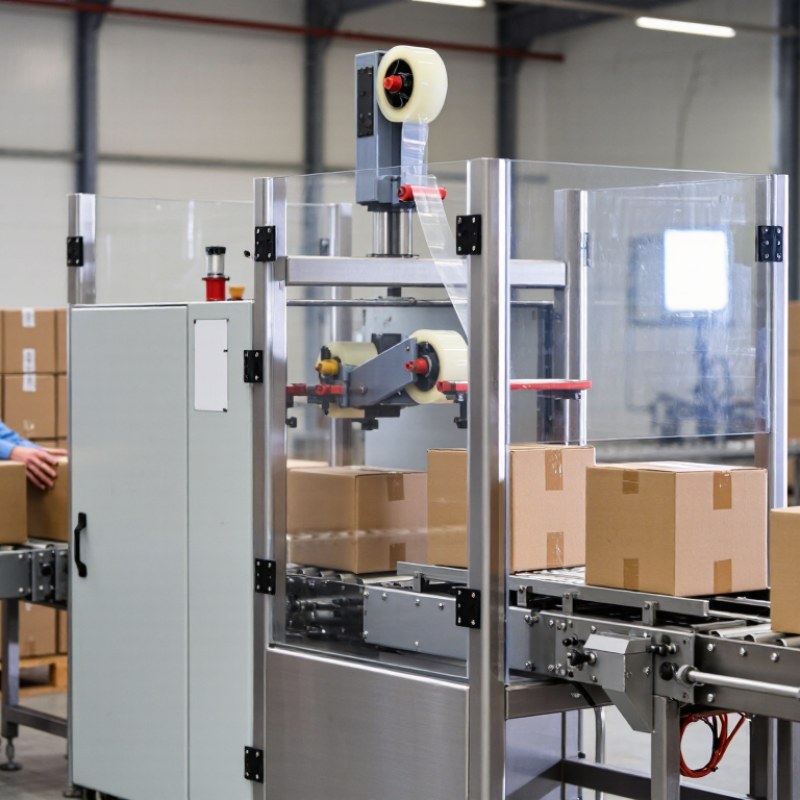
How to Choose the Best Case Sealing Machine?

Define Your Packaging Requirements and Production Goals

Before comparing case sealing machines, define the work they must handle. Start with the carton. Record its length, width, height, weight, and board condition across typical orders. Include the smallest and largest cases, not just the most common one. A machine that seals one stable carton size may struggle when dimensions change between orders.

Measure actual demand. Count cases per minute during busy periods, then compare that figure with average shift output. Leave room for pauses, label checks, and upstream delays; theoretical speed rarely matches a full production day. Note how often operators change carton sizes, and whether those changes need tools or adjustments. Small details matter.

Consider the sealing method and the line around the machine. Tape and glue can suit different carton styles, while flap consistency and surface quality affect seal reliability. Check conveyor height, available floor space, and how cases enter and exit the unit. If one operator must feed cartons and clear jams, a fast machine may not improve real throughput. Ask for a trial using your own cartons, tape, and product weight. Watch several changeovers, not just one successful run. I have seen planning overlook awkward carton variations; they are easy to dismiss, then costly to manage. Leave a little capacity for growth, but avoid paying for speed your line cannot use.

Compare Case Sealing Machine Types and Taping Methods

Choosing a case sealer starts with box variation and daily volume. Manual sealers suit low output and frequent size changes, but depend on steady operator technique. Semi-automatic machines guide the carton while an operator folds its flaps. Automatic models handle continuous lines and repeated case sizes, though changeovers and maintenance need planning. Measure the largest and smallest cartons, then test real, filled boxes—not just empty samples. A slightly crushed carton can track poorly.

Taping method matters as much as machine type. Pressure-sensitive tape needs no activation and suits straightforward packing lines; consistent pressure helps it bond across dusty or recycled board. Water-activated tape requires wetting, but its paper backing can reinforce the carton seam. Hot-melt adhesive is another option for high-throughput lines, though heat and maintenance add operational demands. ISTA’s 3A procedure evaluates parcel packages up to 70 kg through handling exposures such as drops and vibration. Use that benchmark to check whether a sealed carton survives its route, rather than judging the seam by appearance alone. PMMI’s 2024 State of the Industry research also highlights workforce availability and equipment flexibility as manufacturer concerns. That matters when choosing automation. I would still compare tape use, jams, and changeover time on your own line; the best-looking sample may not reflect a full shift.

How to Choose the Best Case Sealing Machine? - Compare Case Sealing Machine Types and Taping Methods

Compare Case Sealing Machine Types

Machine Type How It Works Best Suited For Carton Size Changes Operator Involvement Key Considerations
Manual tape dispenser An operator applies tape directly to the carton using a handheld dispenser. Very low volumes, occasional shipments, or work areas where a powered machine is not practical. Flexible; the operator handles cartons of different sizes. High. The operator positions and applies the tape and controls the carton. Low equipment complexity, but application speed and consistency depend on the operator. Not a powered case-sealing machine.
Semi-automatic, uniform-size The operator folds the carton flaps and feeds the box through a machine that applies tape to the top and bottom center seams. Repeated runs of cartons with the same or similar dimensions. Usually requires manual adjustment when carton dimensions change. Medium. The operator folds flaps, feeds cartons, and may adjust the machine. A practical step up from hand taping. Confirm the machine’s carton size range and adjustment method.
Semi-automatic, adjustable or random-size The operator presents the carton; adjustable guides or sensing mechanisms accommodate varying carton dimensions. Flap handling depends on the machine configuration. Mixed carton sizes at moderate volumes. Designed for size variation within the machine’s specified limits. Medium. Operators generally load cartons and may need to fold flaps or guide boxes. Check how the machine detects and adjusts to carton size, and whether it requires a minimum carton size or consistent carton presentation.
Automatic, uniform-size A powered conveyor moves cartons through the sealing process. Depending on configuration, the machine may fold top flaps and apply tape. Higher, steady volumes of cartons with consistent dimensions. Best when carton sizes remain consistent; changeovers may require adjustment. Lower during the sealing cycle, though operators still load, monitor, and replenish cartons. Confirm whether automatic flap folding is included, along with line integration, guarding, and changeover requirements.
Automatic, random-size Sensors or other controls detect carton dimensions and adjust sealing components as cartons move through the machine. Automated lines handling a changing mix of carton sizes. Accommodates varying sizes within the stated operating range. Lower during normal operation; operators oversee the line and address exceptions. Typically more complex than fixed-size equipment. Verify size limits, carton spacing requirements, detection method, and line compatibility.

Compare Taping Methods

Taping Method Application Common Tape Options Advantages Limitations and Selection Checks
Top-and-bottom center-seam taping Applies one strip along the center seam of the carton’s top and bottom panels. Pressure-sensitive plastic or paper carton-sealing tapes, when compatible with the machine head. Common, straightforward method for regular slotted cartons and many general shipping applications. Performance depends on carton condition, tape quality, surface cleanliness, and correct tape overlap and application.
H-seal taping Seals the center seam and adds strips across the open end seams on the top, bottom, or both faces, forming an “H” pattern. Pressure-sensitive carton-sealing tape; application may require additional taping heads or a separate operation. Provides additional closure coverage and can help protect exposed carton seams during handling and transit. Uses more tape and may add cycle time. Confirm that the machine or line can apply the required cross strips.
Pressure-sensitive tape Adhesive bonds to the carton when pressure is applied by the tape head or applicator. Common options include polypropylene, polyester, PVC, and pressure-sensitive paper tapes; suitability varies by application. Convenient to use and generally does not require water or heat activation. Adhesion varies with carton surface, recycled content, dust, temperature, and storage conditions. Check tape width, roll dimensions, and machine compatibility.
Water-activated paper tape Water activates the adhesive, which bonds with the carton surface as the tape is applied. Reinforced or non-reinforced water-activated paper tape. Can provide a strong bond to suitable corrugated cartons and can help make carton opening visible. Requires a compatible water-activated tape dispenser or application system; it is not interchangeable with standard pressure-sensitive tape heads.

Selection tip: Start with your carton size range, daily volume, required sealing pattern, and level of automation. Then verify the machine’s specifications using your actual cartons and chosen tape. Operating speed, carton limits, and tape compatibility vary by machine configuration.

Evaluate Machine Capacity, Adjustability, and Case Compatibility

Choosing a case sealing machine starts with actual line demand, not the fastest number on a brochure. Measure cases per minute during normal production, including pauses for replenishment and changeovers. The International Federation of Robotics reported 541,302 industrial robot installations worldwide in 2023. That figure signals growing automation, but it does not mean every line needs maximum speed. A sealer running below capacity may still be the better fit if cartons arrive unevenly or operators need time to clear jams.

Check adjustability against your real case range. Record the smallest and largest case lengths, widths, and heights, then test how quickly guides reset between sizes. Confirm the machine handles your board strength, flap style, and tape width. A case that bows under light pressure can misfeed, even when its dimensions appear compatible. Ask for a trial using your own cartons; sample boxes can hide problems. I would not skip this step.

Tip: Track stoppages and changeover time during a production trial, not just peak output. If case sizes vary often, prioritize quick, repeatable adjustments over a higher advertised rate. A simple log helps: case size, jams, tape failures, and minutes to reset. Some compromises remain. That is worth noting before purchase.

Check Safety Features, Integration Options, and Maintenance Needs

How to Choose the Best Case Sealing Machine?

A case sealer should suit the people and workflow around it, not just the box size on a specification sheet. Check for guarded moving parts, a reachable emergency stop, and clear access for adjustments. During a line trial, watch how an operator clears a skewed carton. Small details matter. If a safety feature is awkward to use, ask why before installation.

Integration affects daily output. Compare the machine’s working height and conveyor direction with your existing line, then test the smallest and largest cartons you actually run. Confirm that its speed can keep pace with upstream packing without creating a pileup. Ask how it signals a jam or low tape supply to nearby equipment. A smooth demo is useful, but it may not reflect a busy shift.

Maintenance needs are easy to underestimate. Check whether tape heads, rollers, and wear parts can be reached without awkward stretching, and ask how often routine cleaning and replacement are expected. Test it. Record the time required to clear a jam and reload tape; those minutes can add up. No machine removes every interruption, and a maintenance schedule may need adjustment after real production begins. That can change.

Compare Total Costs and Test the Machine Before Purchase

How to Choose the Best Case Sealing Machine?

Compare Total Costs and Test the Machine Before Purchase

A low purchase price can hide costly tape use, changeovers, repairs, and downtime. Compare each machine’s total cost over a realistic service period, not just its quote. Include installation, operator training, spare parts, maintenance, and energy. If the sealer uses compressed air, check its demand and inspect the plant air system. The U.S. Department of Energy’s Improving Compressed Air System Performance sourcebook reports that leaks can waste 20–30% of compressor output in poorly maintained systems. That figure applies to the system, not one sealer, but it shows why air costs deserve attention. Small costs add up.

Tips: Run your own cartons through a machine trial. Use different box sizes, filled cases, and the tape you plan to buy. Record cases per minute, jams, tape use, seal quality, and changeover time. Ask for a longer test if the first run looks unusually smooth. A spreadsheet can still miss a stubborn carton flap.

Compare results under the same conditions, then ask what happens when a sensor fails or parts need replacing. Get service response times and common spare-part prices in writing. A neat demonstration is useful, but your dusty floor and uneven cartons tell the real story.

FAQS

What carton measurements should I record before choosing a sealer?

Record length, width, height, weight, and board condition. Include the smallest and largest cases. Small variations can cause trouble.

How should I estimate the required sealing speed?

Count cases per minute during busy periods. Compare that rate with average shift output, allowing for pauses and upstream delays. Theoretical speed can mislead.

Why do carton changeovers matter?

Frequent size changes can slow production, especially when adjustments need tools. Test several changeovers, not just one smooth run.

Should I choose tape or glue sealing?

Match the sealing method to your carton style. Flap consistency and surface quality affect how reliably each seal holds.

What should I check around the production line?

Measure floor space and conveyor height. Check how cartons enter and exit. A fast machine may not help if one operator must also clear jams.

What costs should I compare beyond the purchase price?

Include installation, training, tape, spare parts, maintenance, energy, and downtime. If the machine uses compressed air, check the plant air system for leaks.

How should I test a machine before buying?

Run your own filled cartons, planned tape, and different box sizes. Record speed, jams, tape use, seal quality, and changeover time. A spreadsheet may miss a stubborn flap.

What service details should I request?

Get service response times and common spare-part prices in writing. Ask what happens if a sensor fails. I might still overlook a detail, so review the trial notes carefully.

Conclusion

Choosing the right Case Sealing Machine starts with understanding your packaging requirements and production goals, including the types and sizes of cases you handle and the output rate you need. Compare available machine styles and taping methods to find an option suited to your workflow. Then assess capacity, adjustment range, and compatibility with your cases to ensure the machine can accommodate both current and anticipated packaging needs.

Before making a decision, review safety features, integration with existing equipment, and routine maintenance requirements. Consider the total cost of ownership, including installation, supplies, upkeep, and operation—not only the purchase price. Whenever possible, test the machine using your own cases and tape. A practical trial can help confirm sealing quality, ease of use, and performance at your intended production pace.


Mason

Mason

Mason is a seasoned marketing professional with a deep expertise in the company's offerings and a passion for driving brand awareness. With a strong background in digital marketing strategies, he has an innate ability to connect with diverse audiences and effectively communicate product benefits.......