China Top Box Erecting Machines How to Choose?

Time:2026-10-12 Author:Ethan
0%

Choosing Box Erecting Machines is no longer a simple capacity decision. It affects labor, floor space, carton quality, and line stability.

Smithers reported that the global packaging market exceeded $1 trillion in 2023. Its forecast also points to continued growth through 2028. PMMI industry research identifies automation as a practical response to labor shortages and rising production expectations. These trends explain why manufacturers are examining box speed, changeover time, footprint, and integration more carefully.

The machine must fit the carton, not only the brochure.

Jorge Izquierdo, PMMI’s Vice President of Market Development, has emphasized that automation helps manufacturers manage labor challenges while improving operational consistency. His point is relevant here. A box erector that runs quickly but struggles with warped blanks can create stoppages, waste, and frustrated operators. A slower machine may deliver better value when it handles several carton sizes reliably.

Real factory conditions matter. Corrugated dust can collect around sensors. Glue temperature can shift during a long production run. Operators may need tool-free adjustments during a busy shift. These details rarely appear in a headline specification.

This guide compares forming speed, carton range, sealing compatibility, controls, maintenance access, and total ownership cost. It also questions a common assumption: higher output is not always better output. Buyers should verify supplier test results using their own carton samples. They should request references from similar plants. Numbers on paper can look perfect.

The right choice is balanced, measurable, and slightly cautious. That may sound less exciting, but dependable cartons usually matter more than impressive machine speed.
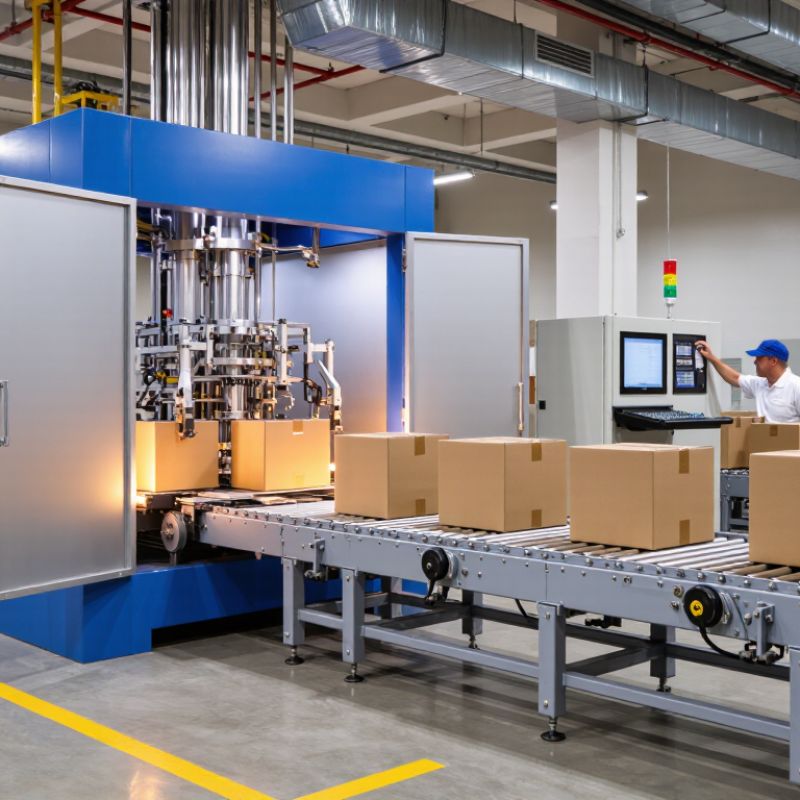
China Top Box Erecting Machines How to Choose?

What Is a Box Erecting Machine and How Does It Work?

A box erecting machine converts flat carton blanks into open, usable boxes. It draws one blank from a magazine, opens it with suction cups, folds the scored panels, and seals the bottom with adhesive or tape. Guides and belts then carry the formed box toward the packing station. The process resembles a careful mechanical hand, not merely a fast conveyor.

Machine choice should begin with real cartons. Measure blank length, width, board thickness, flap design, and required box output. China-based equipment can offer competitive pricing, but specifications need verification. Ask for a live test using your own blanks. A claimed speed of 1,000 boxes per hour may fall sharply with warped board or frequent size changes. Small details matter.

A 2023 Grand View Research report valued the global corrugated boxes market at about 205.7 billion dollars in 2022, with continued growth projected through 2030. Smithers also identifies automation and labor reduction as important packaging investment drivers. These trends support automatic forming, but speed is not the only measure. Check glue accuracy, changeover time, sensor reliability, guarding, spare-part access, and operator training. PMMI reports that labor shortages continue influencing packaging automation decisions. That sounds convincing. Still, maintenance records and acceptance tests reveal more than brochures. A practical evaluation should record ten consecutive production runs, including rejects, downtime, and actual box quality.

Which Types of Box Erecting Machines Are Available in China?

China Top Box Erecting Machines: How to Choose?

Which Types of Box Erecting Machines Are Available in China?

China’s box erecting equipment market serves e-commerce, food, electronics, and general manufacturing. Smithers’ The Future of Global Packaging to 2029 values the global packaging market above $1 trillion. This growth increases demand for stable carton forming. However, speed alone should not decide your purchase.

Automatic vertical carton erectors open flat corrugated blanks, fold flaps, and seal the bottom with tape or hot melt glue. They suit regular shipping cartons and continuous production lines. Horizontal erectors handle wider blanks and complex folding patterns. Wrap-around machines form cartons tightly around products, reducing empty space. Semi-automatic models require an operator to load blanks, but they cost less and fit changing production volumes.

A practical buyer should compare carton dimensions, board strength, and sealing methods. Check the magazine capacity. A short magazine may force frequent refilling near a packing line. Servo-driven systems offer precise folding, while pneumatic systems remain simpler to maintain. PMMI’s 2024 packaging trends research identifies labor reduction and automation as major investment factors. Yet, imported technical terms can confuse local teams. Request sample trials with your actual cartons. A machine rated at 30 cases per minute may run slower with warped board or weak creases. That detail is easy to overlook. Estimates from market reports also vary, so verify output through factory testing, maintenance records, and documented energy consumption.

How to Evaluate Machine Speed, Accuracy, and Box Compatibility?

Choosing a top box erecting machine requires more than checking its advertised speed. A practical evaluation starts with your real carton samples, not only technical brochures. Ask the supplier to run different sizes, board thicknesses, and folding styles. Record completed boxes per minute during a continuous test. Short bursts can look impressive. Stable output matters more.

Accuracy affects sealing, stacking, and product protection. Check whether each box opens squarely and keeps consistent flap alignment. Measure the corner gaps with a ruler after production. Even a two-millimeter error can create problems on a high-speed packing line. Review changeover time, sensor response, and rejected boxes. A machine that runs quickly but needs frequent adjustment may reduce actual productivity. In my experience, operators often value simple controls more than complex automation. That preference is easy to overlook.

Tips: Prepare at least three carton samples before requesting a quotation. Test the smallest and largest sizes. Ask for production videos with visible counters and reject records. Confirm spare-part availability, training, and remote support. Do not trust one successful demonstration. Repeat the test after a changeover. Compatibility should include your adhesive, conveyor height, carton material, and factory space. One weak point can affect the entire line. A careful trial may feel slower, but it usually reveals the machine’s real working limits.

What Features Should You Check Before Choosing a Supplier?

Choosing a Chinese box erecting machine starts with the supplier, not the catalogue price. Ask for proven output on your carton board, dimensions, and folding style. A machine rated at 30 boxes per minute may slow sharply with warped blanks. Request a live factory test using your material. Record speed, rejects, glue temperature, noise, and changeover time. Short tests can mislead. Run one for at least two hours.

The International Federation of Robotics reported 276,288 industrial robots installed in China during 2023, representing 51% of global installations. This shows strong automation capability, but it does not guarantee packaging expertise. Check servo accuracy, sensor stability, electrical schematics, safety guarding, and remote diagnostics. Ask for factory acceptance test records and traceable component lists. PMMI’s 2024 State of the Industry report identifies labor availability and automation as continuing investment drivers. Therefore, evaluate stable uptime, not only headline speed.

Supplier reliability needs evidence. Request three comparable installations, spare-part lead times, training hours, warranty exclusions, and response targets. Inspect calibration records and service logs. Smithers’ packaging market analysis highlights continuing demand for efficient, flexible packaging systems through 2028. Your supplier should explain carton-size limits and future upgrade costs clearly. A polished video is not enough. I would test changeovers personally. This step is often overlooked, and that is a costly mistake.

China Top Box Erecting Machines How to Choose? - What Features Should You Check Before Choosing a Supplier?

A practical supplier-evaluation table for automatic carton box erecting equipment

Evaluation Dimension Recommended Benchmark Why It Matters What to Verify Before Ordering
Carton Size Compatibility The machine should cover the actual carton length, width, and height range required for production, including tolerances. A machine outside the carton range can cause poor squaring, flap interference, jams, or unstable forming. Send approved carton drawings and request a forming test using the customer’s own samples.
Machine Speed Select a rated speed that exceeds the required line output. Common automatic case-erecting equipment is often specified in cases per minute, but actual output depends on carton quality and configuration. Rated speed and sustained production speed are not always the same. A realistic operating margin improves reliability. Ask for continuous-run test results, reject-rate data, and output figures using the same carton type and tape format.
Carton Material and Quality Confirm compatibility with the specified corrugated board grade, flute type, carton dimensions, moisture condition, and printing finish. Warped, soft, damp, or dimensionally inconsistent cartons can reduce forming accuracy even when the machine is correctly adjusted. Define carton flatness, board thickness, compression condition, and dimensional tolerances in the technical agreement.
Forming and Squaring Quality Boxes should open fully, remain square, and hold their shape while transferring to the next conveyor or packing station. Accurate forming prevents downstream loading problems, product damage, and carton collapse. Use measurable acceptance criteria for squareness, flap position, adhesive or tape placement, and carton stability.
Sealing Method Choose a compatible bottom-sealing method, such as pressure-sensitive tape or hot-melt adhesive, based on packaging requirements. The sealing method affects consumable cost, sealing strength, maintenance, operating temperature, and line speed. Confirm tape width or adhesive specification, sealing position, changeover procedure, and test-seal results.
Changeover and Adjustment Prefer tool-free or clearly marked adjustments, with recipe storage where multiple carton sizes are used. Fast, repeatable changeovers reduce downtime and lower the risk of incorrect manual settings. Request documented changeover steps, measured changeover time, adjustment scales, and operator training materials.
Controls and Safety The machine should include guarding, emergency stops, fault messages, interlocks, and a control system suitable for the intended market. Effective safeguards protect operators and make fault diagnosis more consistent. Review the risk assessment, electrical drawings, safety-circuit details, manuals, and applicable local compliance requirements.
Electrical and Pneumatic Requirements Confirm voltage, frequency, phase, rated power, compressed-air pressure, and air consumption before installation. Incorrect utilities can prevent startup, reduce performance, or require unexpected site modifications. Request a utility list and verify it against the factory’s electrical supply and compressed-air system.
Line Integration Check conveyor height, conveying direction, infeed arrangement, communication signals, and available floor space. A box erector must operate reliably with upstream carton storage and downstream filling, packing, or palletizing equipment. Provide a layout drawing and define start/stop signals, speed matching, accumulation, and interface responsibilities.
Reliability and Maintainability Prioritize accessible wear parts, clear lubrication points, robust frame construction, and documented preventive maintenance. Simple maintenance reduces unplanned downtime and makes local servicing easier. Ask for a maintenance schedule, spare-parts list, expected replacement intervals, and troubleshooting procedures.
Factory Acceptance Testing Require a documented test with agreed carton samples, operating conditions, output, sealing quality, and safety functions. Testing before shipment reduces the risk of discovering performance problems after installation. Include acceptance criteria, test duration, sample quantity, permissible rejects, and corrective-action procedures in the contract.
Documentation and Training The supplier should provide operating instructions, electrical and pneumatic diagrams, parts identification, maintenance guidance, and training. Complete documentation supports safer operation and faster fault recovery. Confirm document language, delivery format, training duration, and whether remote technical support is available.
Spare Parts and After-Sales Support Evaluate spare-parts availability, response time, remote support, commissioning service, and warranty terms. Support quality directly affects recovery time when sensors, belts, cutters, cylinders, or sealing components require attention. Obtain a written warranty scope, service process, recommended spare-parts package, and support contact procedure.
Total Cost of Ownership Compare purchase price together with installation, utilities, tape or adhesive consumption, spare parts, maintenance, training, and downtime risk. The lowest initial quotation may not provide the lowest long-term operating cost. Request a transparent quotation with included and excluded items, delivery terms, installation scope, and payment milestones.
Selection tip: Base the final decision on a sample-carton trial, documented acceptance criteria, total cost of ownership, and the supplier’s ability to provide dependable technical support.

How to Compare Costs, Quality, Support, and Customization Options?

Choosing a top box erecting machine requires more than comparing purchase prices. Compare total cost over five years. Include energy, glue, spare parts, maintenance, training, and downtime. A cheaper quote can become expensive.

The International Federation of Robotics reported 541,302 industrial robots were installed worldwide in 2023, a 2% annual increase. This signals stronger automation demand, but automation is not automatically efficient. Ask suppliers for measured output, not brochure speed. Request a live trial using your carton board, dimensions, and adhesive. Check stable forming at low and high speeds. Inspect flap alignment, carton squareness, changeover time, and rejected boxes. A useful comparison includes cost per acceptable carton, not cost per machine.

Quality also depends on support. PMMI’s 2024 industry research identifies labor availability and workforce skills as continuing concerns for packaging operations. Ask how quickly technicians respond, whether remote diagnostics are available, and which spare parts are stocked locally. Customization should solve a real production problem. Consider tool-free adjustments, multiple carton sizes, vision inspection, or integration with conveyors. Avoid paying for features operators will rarely use. This is where many evaluations become optimistic. That assumption needs testing. Require written performance criteria, acceptance records, warranty limits, and operator training. A practical 30-day review after installation can reveal noise, glue buildup, difficult cleaning points, and repeated minor stops that a factory demonstration may hide.

FAQS

What is a box erecting machine?

It changes flat carton blanks into open boxes.

How does the forming process work?

Suction cups pull one blank from a magazine.

Which carton details should buyers measure?

Measure length, width, board thickness, and flap design.

What types of box erectors are available?

Vertical machines suit regular cartons and continuous production.

How should I choose between automatic and semi-automatic equipment?

Choose automatic equipment for steady, higher-volume production.

What sealing methods can these machines use?

Common options include tape and hot melt adhesive.

Can the advertised production speed be trusted?

Treat the stated speed as a starting point.

What should I check during a factory test?

Use your own carton blanks during testing.

What maintenance concerns should buyers consider?

Confirm spare-part access and service procedures.

Conclusion

Choosing the right China Box Erecting Machines requires a clear understanding of how the equipment forms flat cartons, opens them into shape, folds the bottom flaps, and prepares each box for filling. Buyers should compare automatic, semi-automatic, high-speed, and customized models according to production volume, carton dimensions, material type, and available workspace. Machine speed is important, but stable performance, accurate folding, smooth feeding, and compatibility with different box sizes are equally essential for reliable packaging.

Before selecting a supplier, examine the machine’s construction, control system, adjustment method, safety design, maintenance requirements, and quality inspection process. It is also important to evaluate total cost rather than purchase price alone, including installation, spare parts, energy use, training, and after-sales support. A dependable supplier should provide clear technical information, responsive service, flexible customization, and a practical warranty. By balancing efficiency, durability, compatibility, support, and long-term operating value, companies can choose equipment that fits their packaging needs and future production plans.


Ethan

Ethan

Ethan is a seasoned marketing professional with a deep expertise in our company's innovative product line. With a passion for sharing knowledge and insights, he takes the lead in regularly updating our corporate blog, where he explores industry trends, product features, and effective marketing......